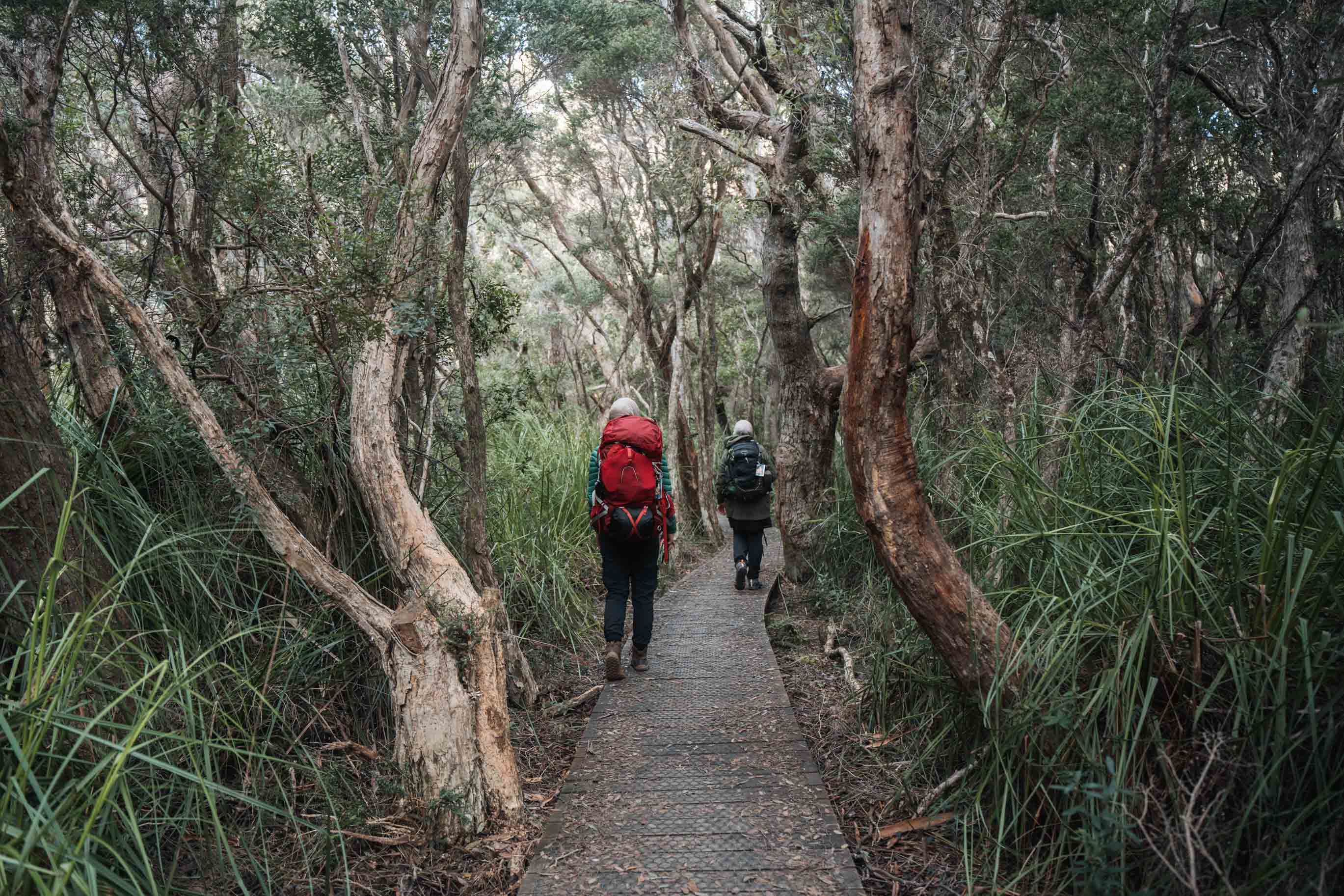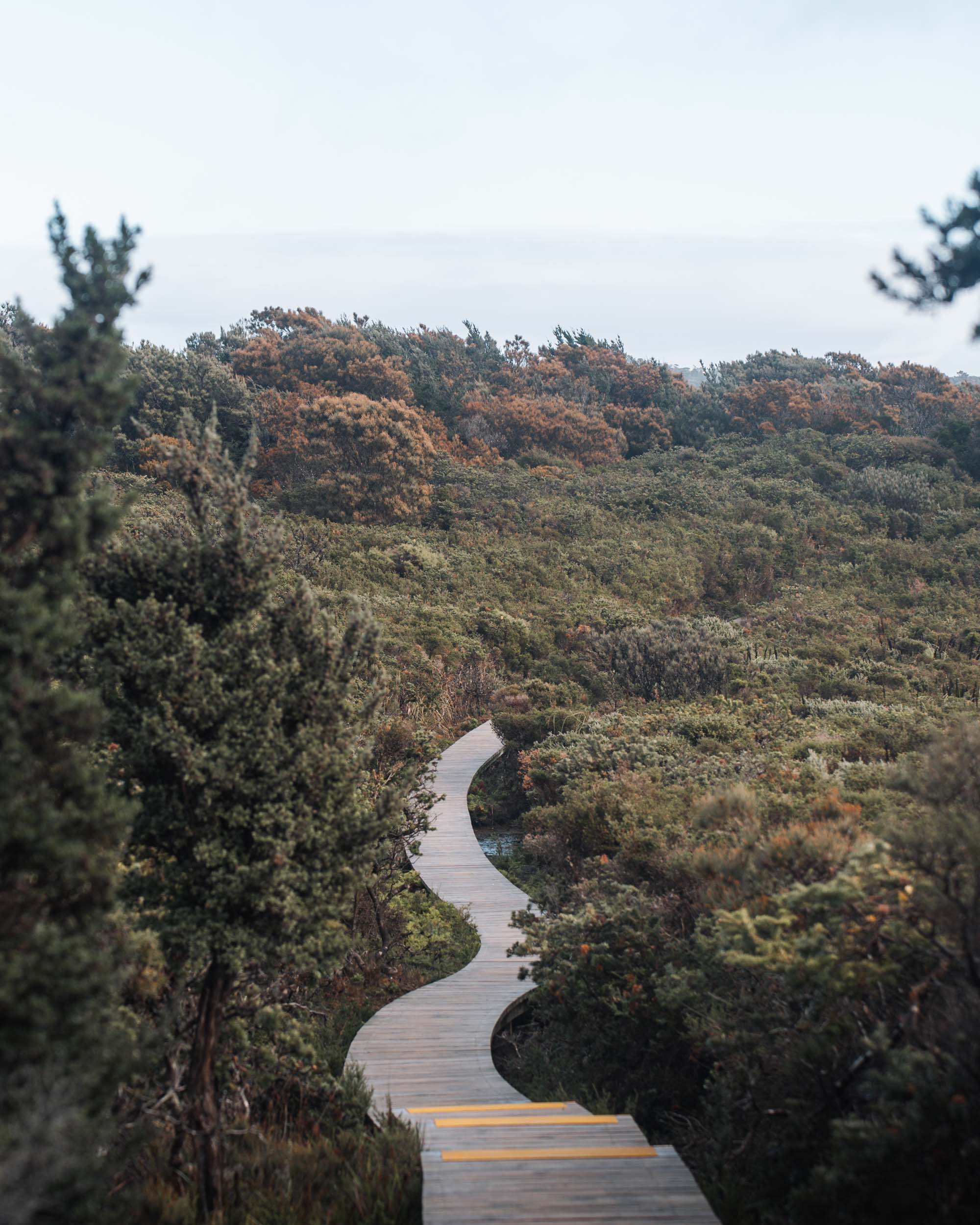



The Three Capes Track in Tasmania is one of the most stunning multi-day hikes in Australia. It runs for four days and three nights, covering 48 km of wild coastline, mossy forest, and dramatic cliffs.
I usually prefer unmarked trails and camping, but this one completely surprised me. It beat my expectations in every way. Even though you sleep in huts, the journey still felt raw and special.
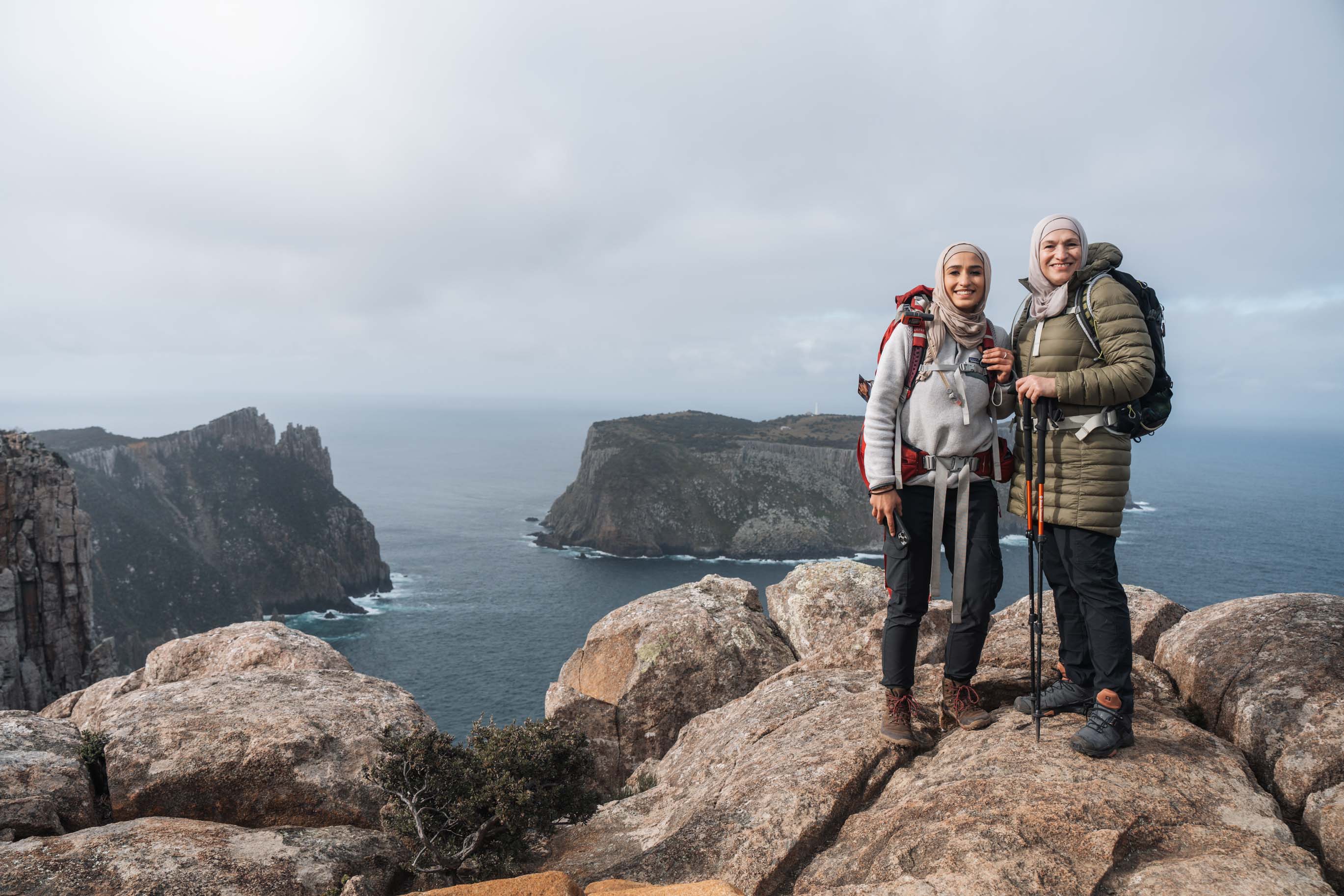
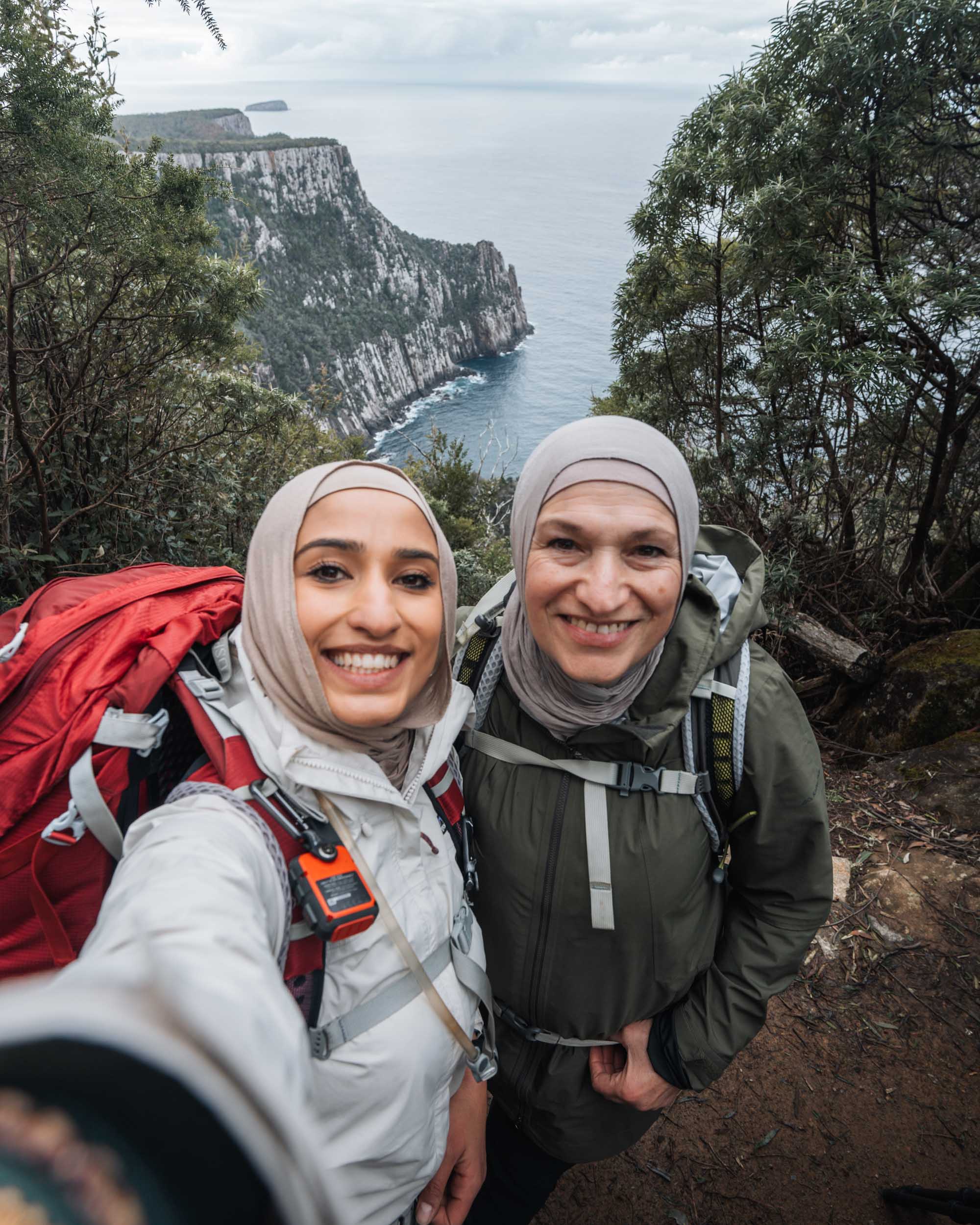
For me, this trip was even more meaningful because I hiked it with my mum. It was her first ever multi-day hike. The idea came up just one week before, and I booked it on the spot. With no training and no time to prepare, we packed our bags and went for it.
I carried 22.5 kg (with all my camera gear) so mum could keep hers lighter at 9.5 kg. She could have carried more, but I wanted to play it safe so she could enjoy it. And she did, she absolutely smashed it.
We started on the 6th of August 2025, in winter. Only nine out of 48 spots were booked, which meant quiet trails, plenty of space in the huts, and an eight-bed room all to ourselves every single night. Winter really is a special time to walk this track.
About the Three Capes Track
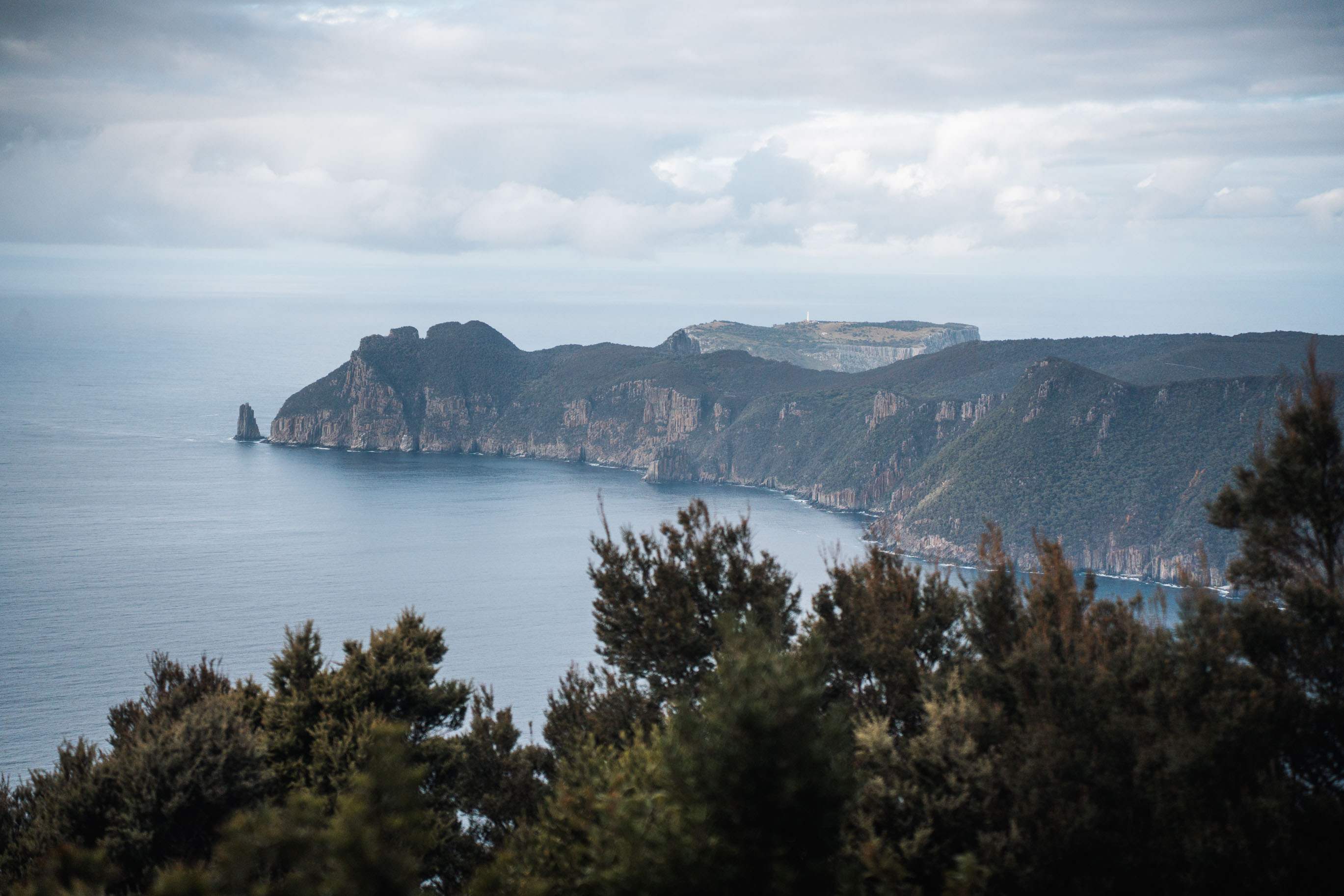
Opened in late 2015 after more than a decade of planning and construction, the Three Capes Track reimagined Tasmania’s classic trails into one of Australia’s most accessible and beautifully built hiking experiences. The 48 km route links Denmans Cove to Fortescue Bay through Tasman National Park, taking in Cape Pillar and Cape Hauy along the way.
More than 18,000 helicopter flights were used to carry materials to remote sections of the trail, creating world-class boardwalks, stairs, and huts that blend into the environment. The result is a track that’s as comfortable as it is wild, perfect for both new and experienced hikers.

Day 1: Port Arthur to Surveyors Hut
- Distance: 4 km
- Time: 1.5 hours
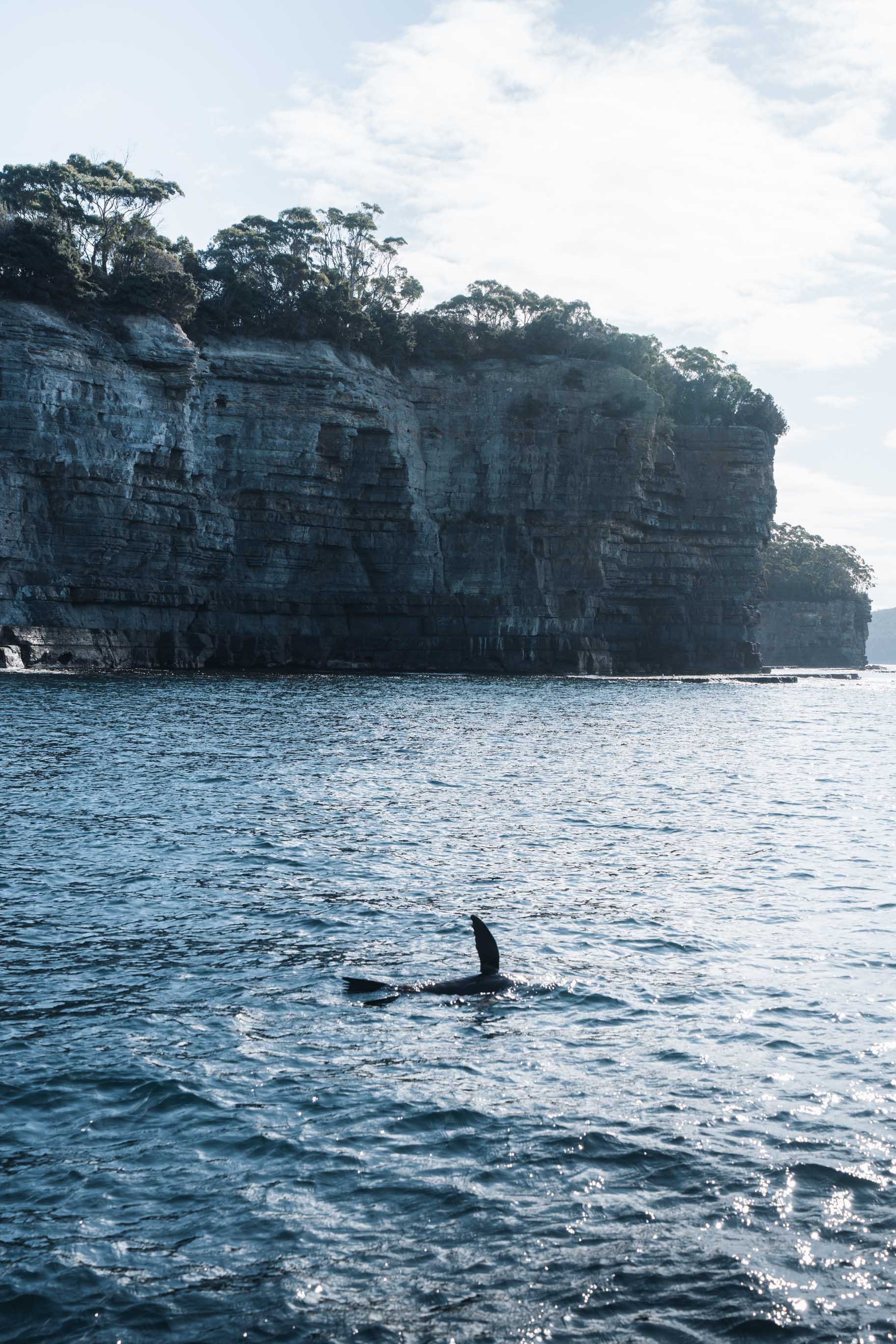
- Highlights: Boat trip past towering sea cliffs, seals drifting in the water, and a sea eagle perched high in a tree.
- Trail: A short afternoon walk through coastal heathland.
- Stay: Surveyors Hut, with views across Cape Raoul.
We woke up early at our lodge (Stewarts Bay Lodge), had breakfast, weighed our packs, and made our final checks. It was really happening.
Check-in for the hike is at the Port Arthur Visitor Centre, which opens at 9 am. There’s free long-term parking about 500 m away, and you can store extra luggage securely at the Visitor Centre if needed.
We had booked the 11am boat to depart. By the time we arrived and checked in, there wasn’t much time to explore Port Arthur Historical Site, but we grabbed coffee from the cafe before heading to the meeting point. They sell sandwiches, snacks, soup and hot drinks etc, if you need something before the hike. There’s also a small food section inside the visitor centre that stocks dehydrated meals like Strive, but no gas canisters. You don’t really need one for this track, but if you plan to make coffee along the way, don’t expect to buy it there.
After we checked in, we stored our extra bags (there’s a luggage room for big suitcases and secure lockers if you want to leave valuables like laptops, you keep the key). Then we walked down to the jetty to meet our group.
Usually, the track takes 48 people. For us, just nine. These would be the faces we’d see for the next four days.
The boat ride itself was a highlight. Rugged coastline, kelp forests, seals chilling in the water, and a sea eagle sitting up in the trees. It felt like the perfect start.
There are two daily boat departures (11:30 am and 2:00 pm).
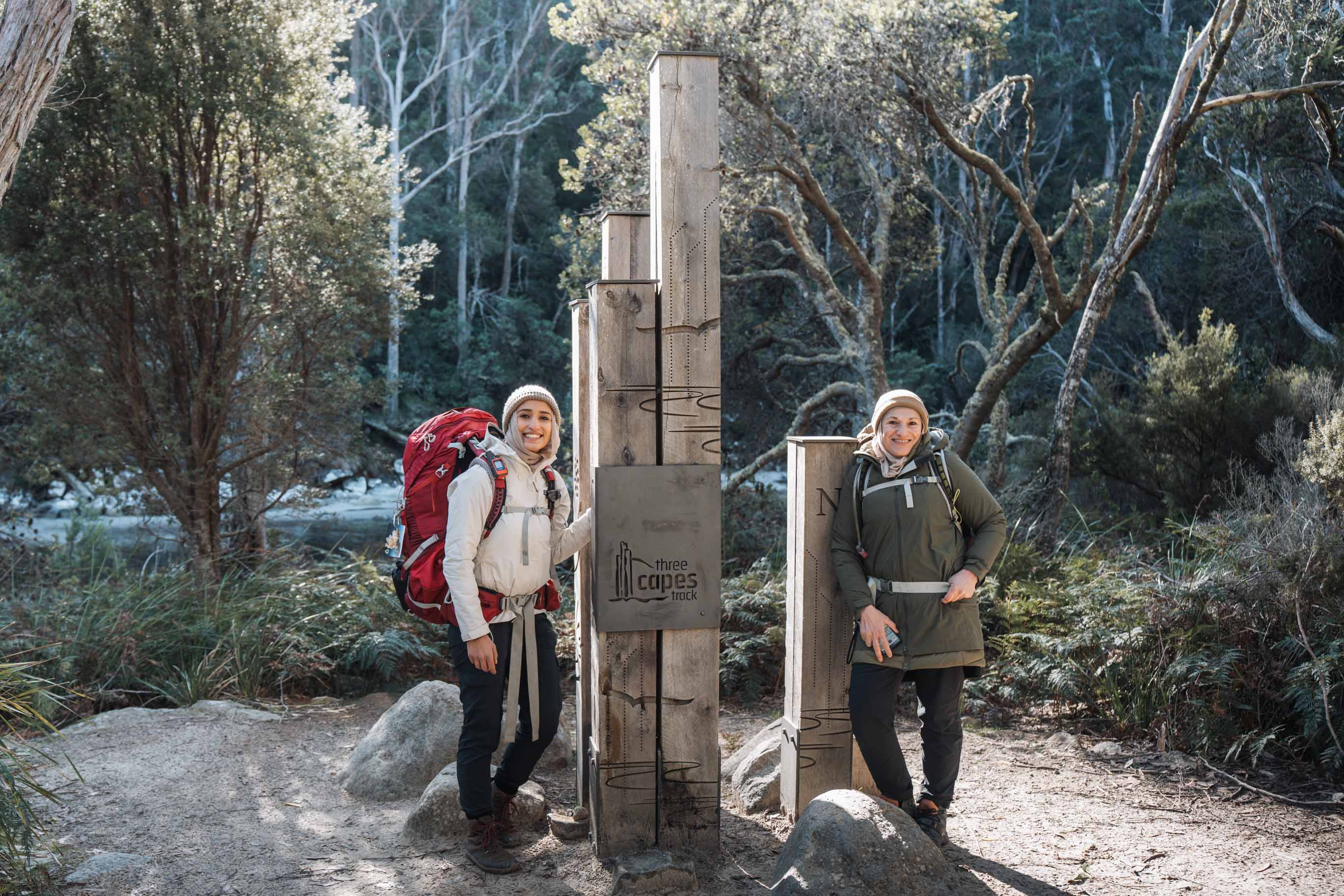
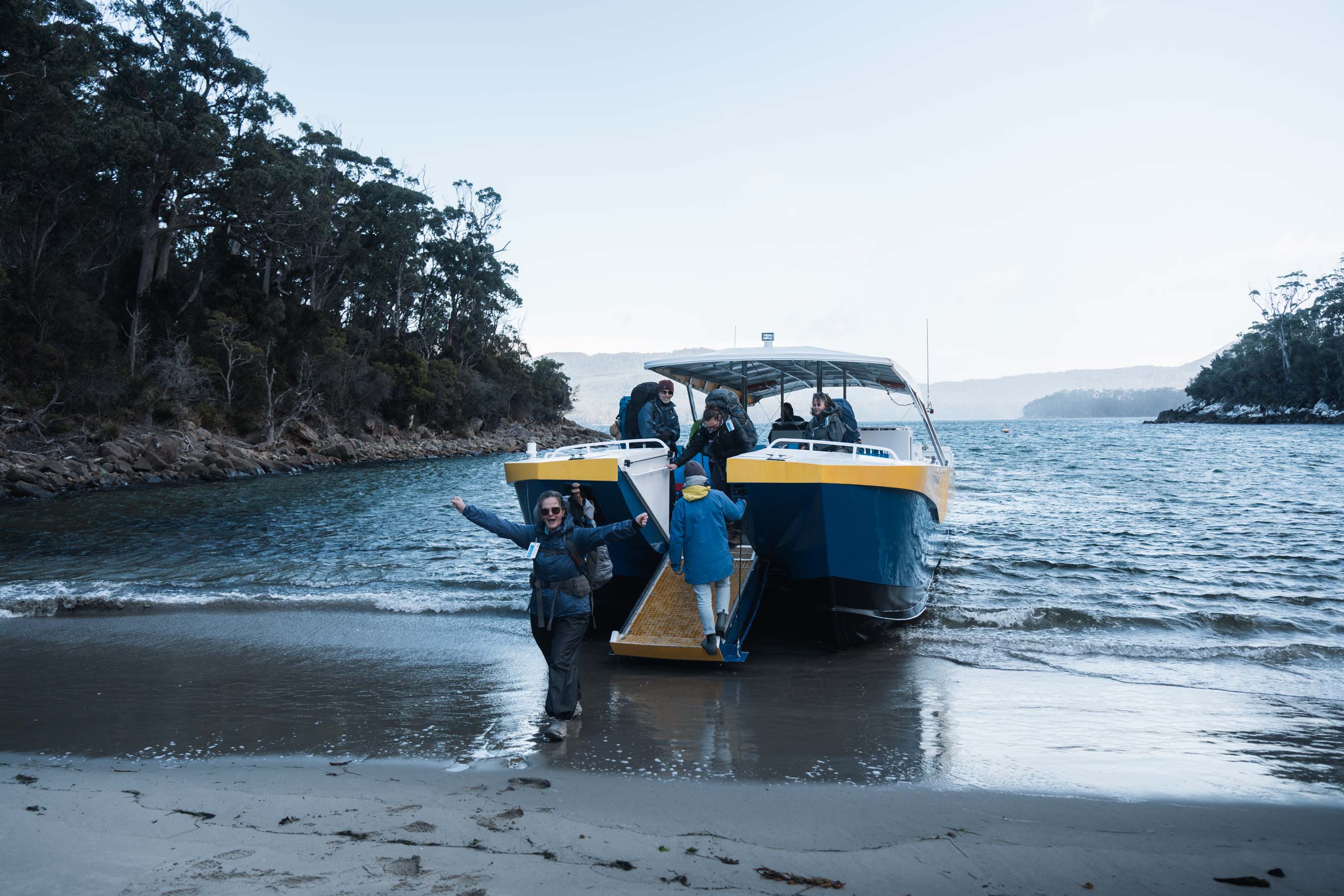
Seventy-five minutes later, boots hit the sand at Denmans Cove. Packs on, feet in the sand, and just like that, we were off.
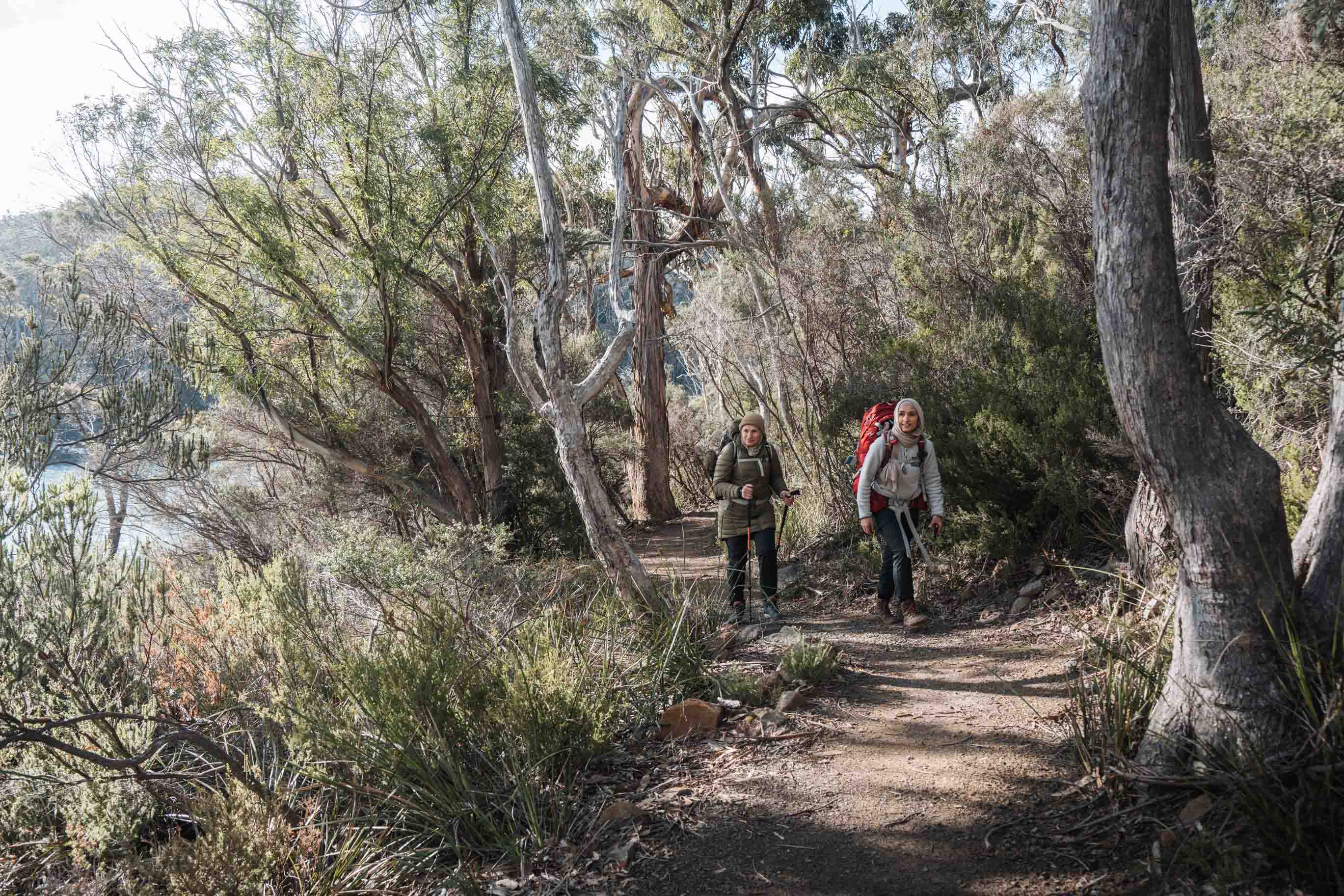
The trail was short, only 4 km, but almost straight away the weather showed off with a quick burst of rain, then wind, then sun. Day one may have been short on paper, but it already had its surprises.
The moment we reached Surveyors Hut, it started hailing. It came and went quick, then the sky cleared again.
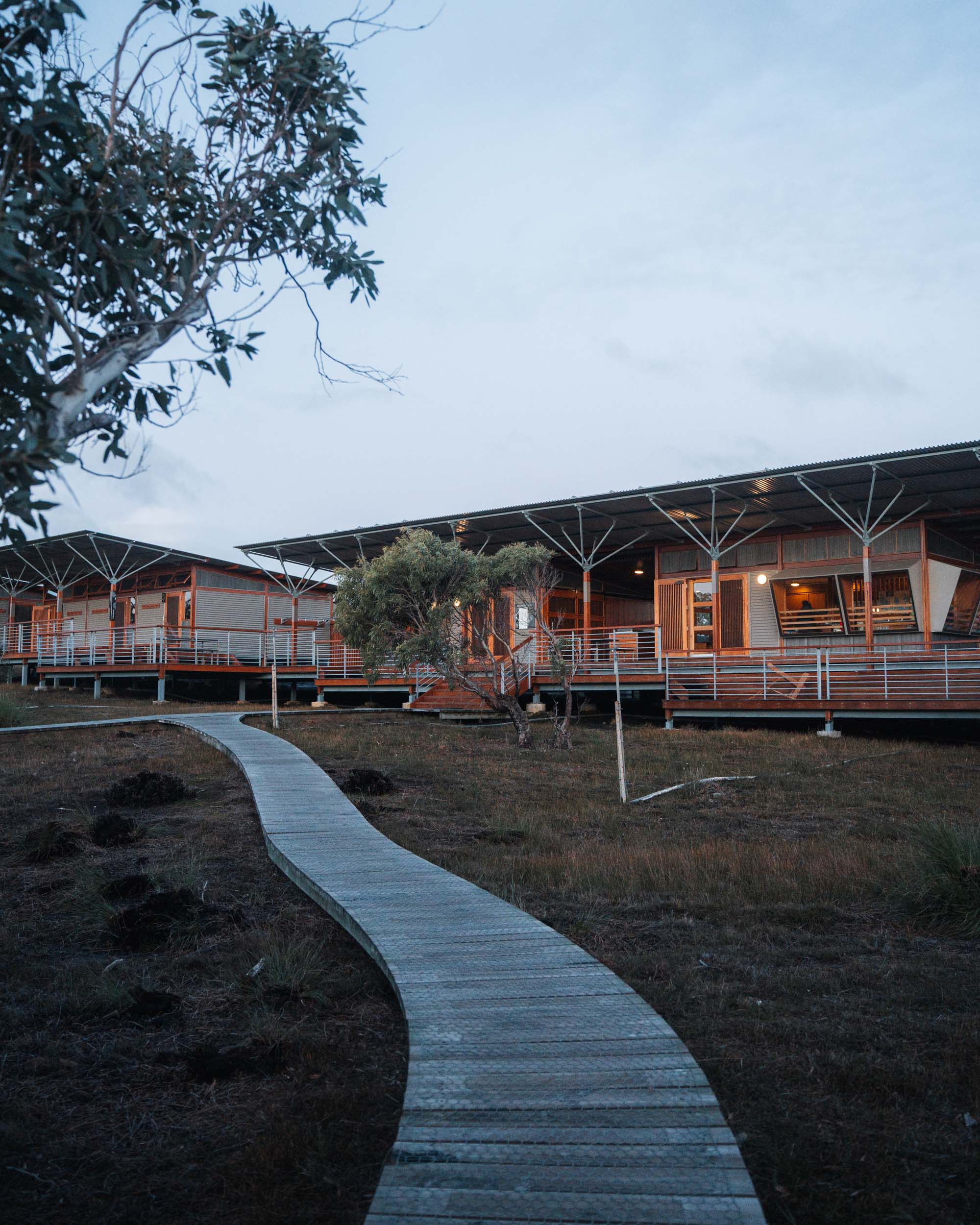
The hut itself felt like luxury. We unpacked, had snacks, and listened to the ranger’s welcome talk before walking out to a lookout for sunset. The whole landscape was glowing.
The ranger then gathered us together to have a chat - he covered safety, wildlife, and facilities, including wombats, Bennett’s pademelons and what the following day would look like. He explained Leave No Trace practices, water, and how to manage toilets if you’re caught between huts. It was informative and a good reminder that this is still a remote environment.
Surveyors Hut has two kitchen areas with gas stoves, kettles, sinks, and even a BBQ outside, so it’s a great chance to cook something fresh.
At night, we sorted our sleeping bags, made dinner (lentil dahl, simple and warm), and sat with mugs of tea, swapping stories with the rest of the crew before calling it an early night.
Day 2: Surveyors Hut to Munro Hut
- Distance: 11 km
- Time: 4–5 hours
- Highlights: Forest sections, coastal lookouts, and benches with ocean views.
- Trail: Gentle elevation, mostly boardwalks.
- Stay: Munro Hut
We woke up to a soft sunrise, the sky pink, and so many wallabies grazing outside. Coffee and cereal at the table set us up for the day. Mum’s energy was high from the start, singing and skipping down the track.
The trail wound through forest and coastal heath. At every seat, we stopped to rest, laugh, and take it in. Mum loved pulling out the guidebook to read stories about the land. It gave so much meaning to each stop.


Lunch was falafel wraps with dehydrated hummus, spinach, and cucumber. Simple, fresh, and perfect with a view of the ocean.
By late afternoon we reached Munro Hut. Each hut feels like it belongs to the landscape, and this one, with views stretching forever, was no exception.
Here you’ll also find the outdoor showers. We nearly skipped them because it was so cold outside, but I’m glad we didn’t. It ended up being one of the best showers ever. Mum loved it, hot water, fresh air, nothing but the forest around us.
Munro also has yoga mats, board games, and a small library. The lookout deck here is one of the best sunset and sunrise spots on the track.
That night heavy rain fell outside while we were warm inside. We made minestrone for dinner, sipped tea, shared chocolate biscuits, had peanut butter, Vegemite & honey for snacks, and laughed ourselves silly in our sleeping bags. The perks of having the hut to yourself! It was one of those nights you don’t forget.
Day 3: Munro Hut to Retakunna Hut (via Cape Pillar and The Blade)
- Distance: 17 km
- Time: 5-7 hours
- Highlights: The Blade, Cape Pillar cliffs, endless boardwalks, wallabies at Retakunna.
- Trail: Long but mostly with light packs (you can leave gear at Munro).
- Stay: Retakunna Hut, tucked into forest.
We woke to one of the most beautiful sunrises I’ve ever seen, the ocean glowing pink and gold. It felt like the perfect start to what would be mum’s longest day on the trail.
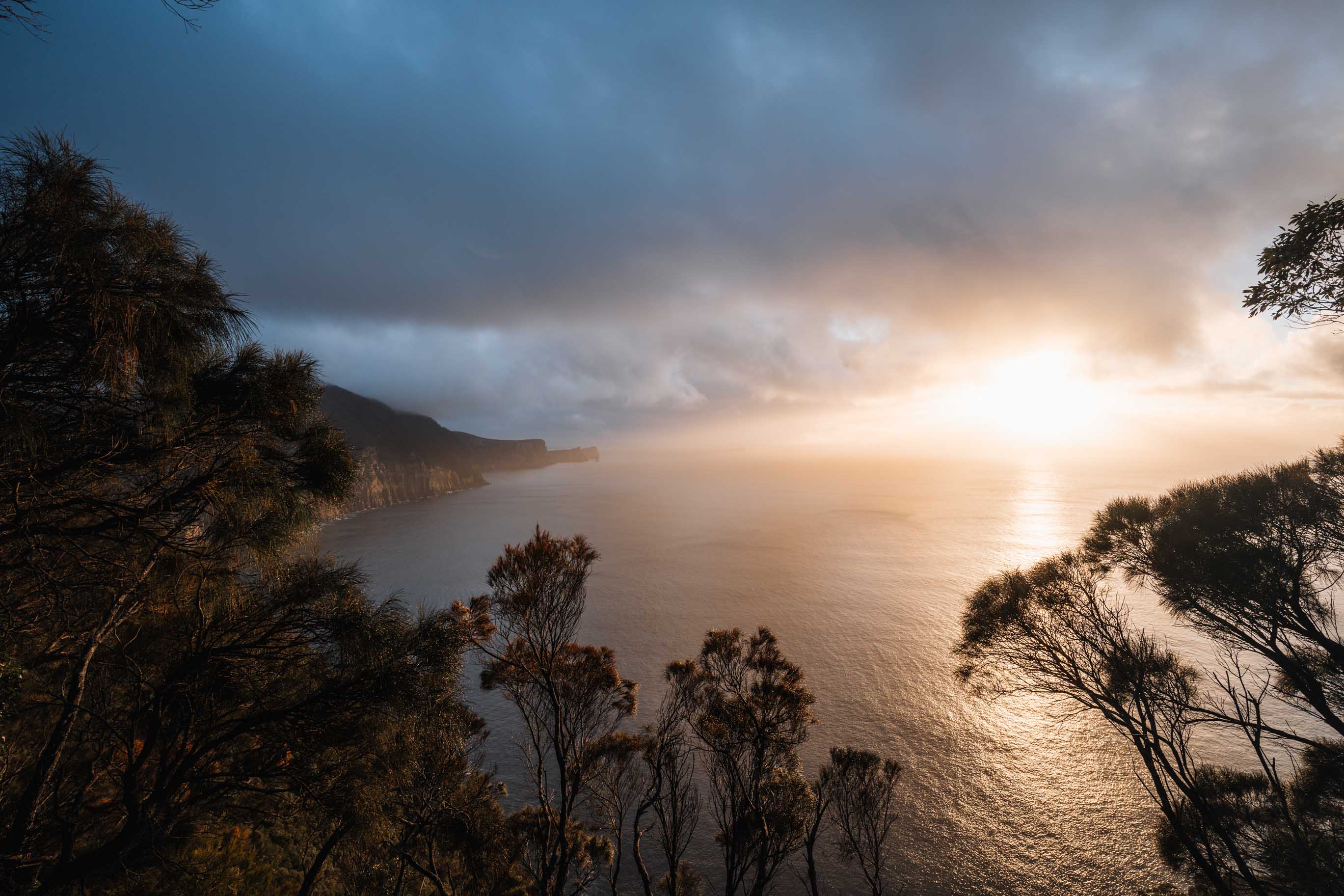
We left most of our gear at Munro, carrying only light packs for the side trip to Cape Pillar. That decision made such a difference.
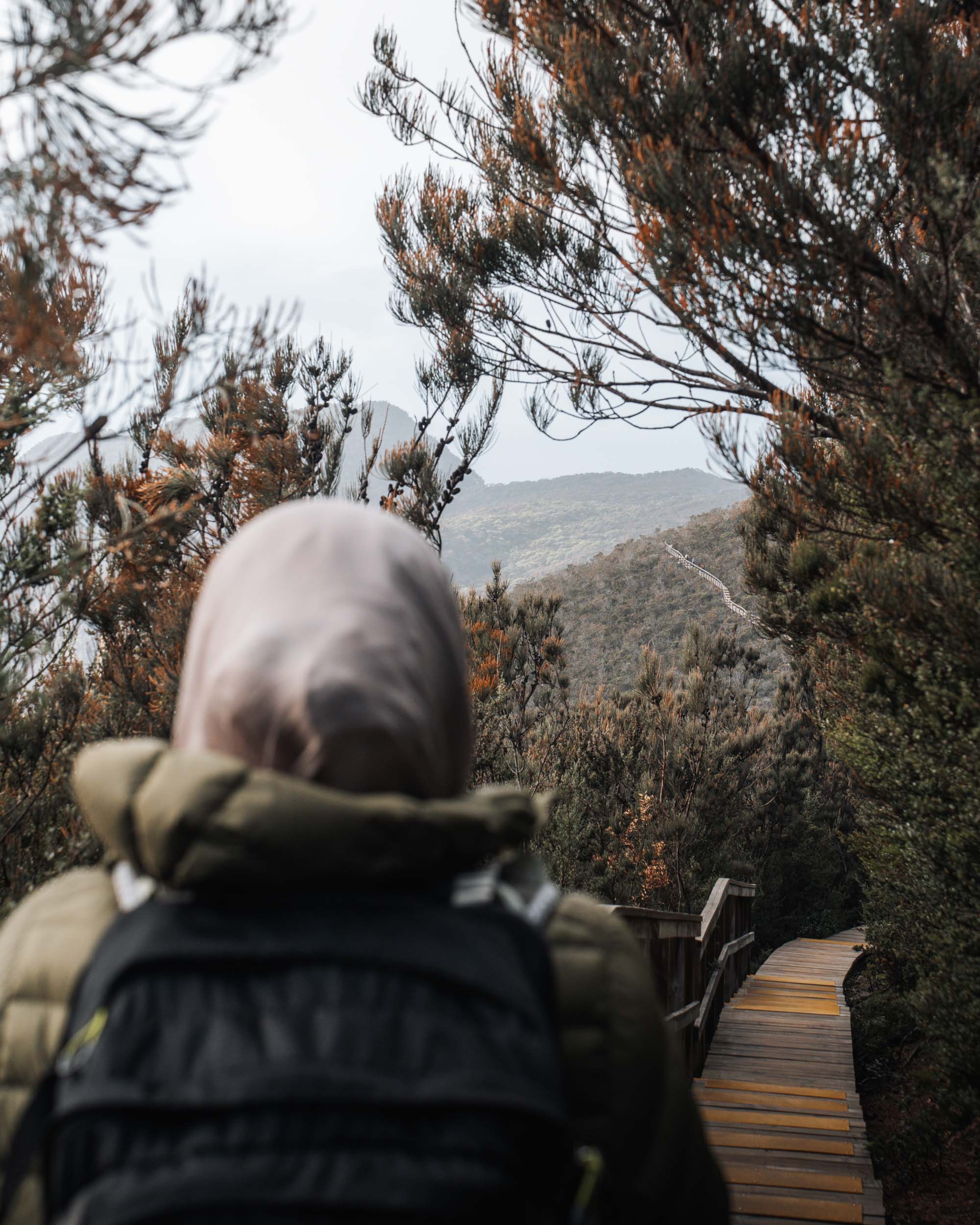
The trail itself was stunning, with boardwalks, coastline views, and plenty of guidebook stops. At one point, mum looked ahead and saw the boardwalk stretching for kilometres into the hills. She laughed in disbelief. “I’m really meant to walk that?” And then she did.

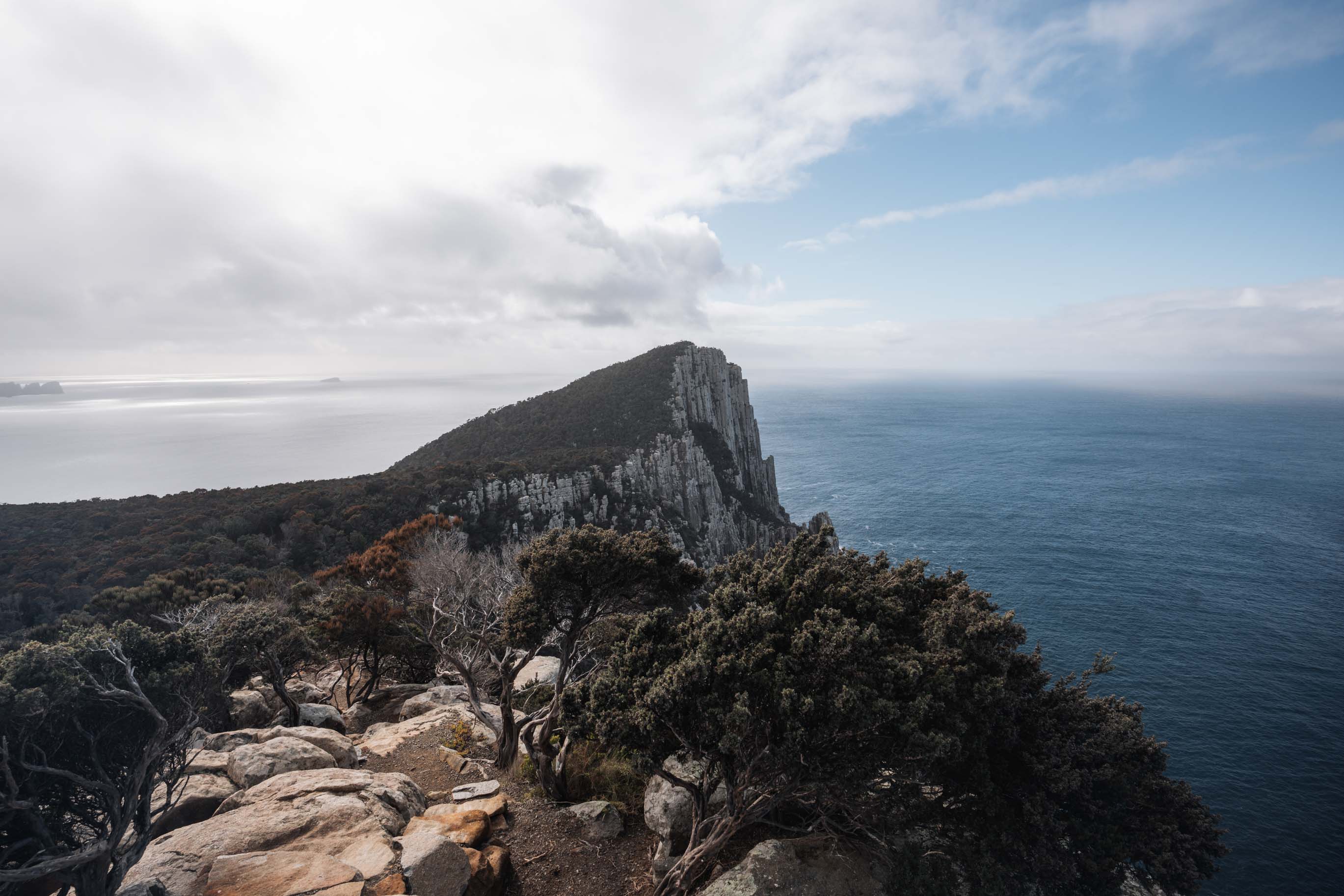
The weather was perfect, the views out of this world. Mum even walked up to the Blade with me. Normally she finds cliffs scary and would not get close to the edge, but this wasn’t too bad at all.

At the end of Cape Pillar, it felt like we’d reached the edge of the world. The cliffs dropped straight into the sea, and I couldn’t have been prouder. Her longest hike ever, and she didn’t just get through it, she owned it.
We looped back, picked up our gear, and continued to Retakunna Hut. Wallabies hopped everywhere as if to welcome us in.
By the time we reached Retakunna, everyone was tired but proud. The hut is surrounded by tall forest and feels quiet and remote, the perfect place to rest before the final day. At night there were lots of pademelons around, and the following morning they were everywhere.
Dinner was simple again, dahl for me, mushroom pasta for mum. We took group photos, shared laughs, and said our goodbyes in case the morning scattered us too quickly. That night felt like family, even if only for a moment.

Day 4: Retakunna Hut to Fortescue Bay (via Cape Hauy)
- Distance: 14 km
- Time: 6-8 hours
- Highlights: Mossy forest, fungi, Mount Fortescue, endless cliffs, Cape Hauy’s stairs.
- Trail: Challenging with over 2,500 stairs, but unforgettable.
- Finish: Fortescue Bay, shuttle back to Port Arthur.
Our final day began misty, with wallabies grazing around the hut. We set off at 7:30 to give ourselves plenty of time.
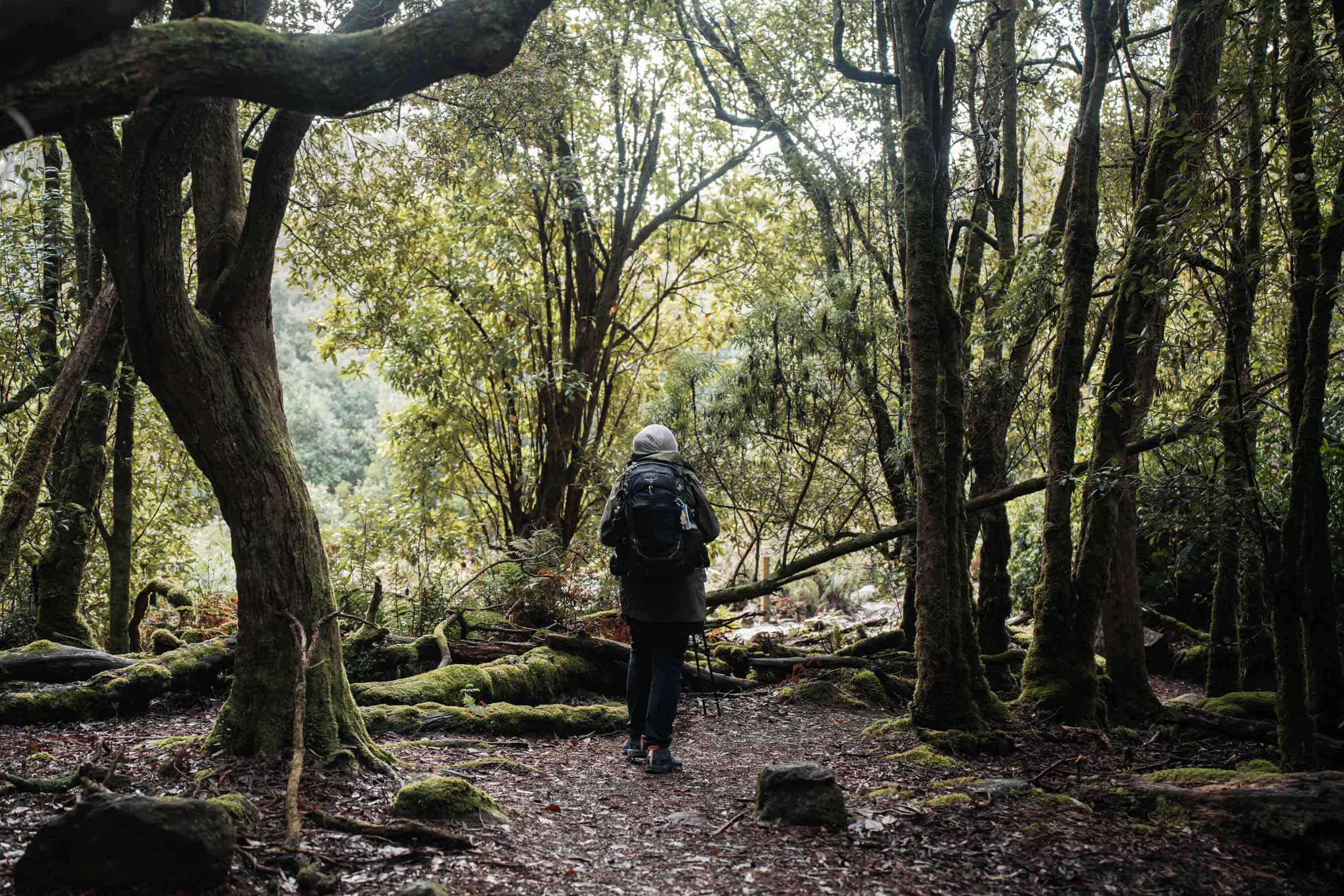
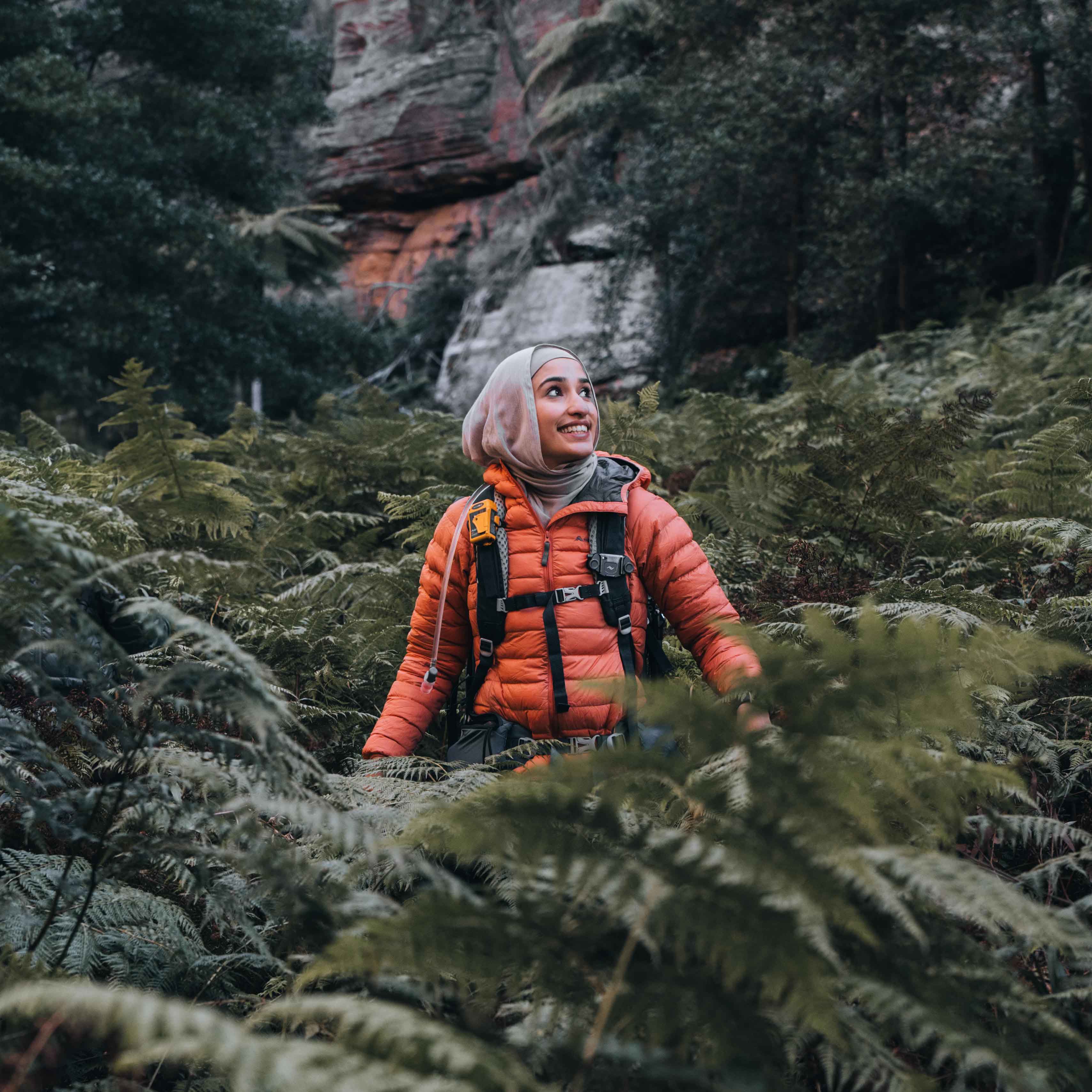
The trail changed constantly…and was definitely my favourite day in terms of the scenery, from lush mossy forest to fresh eucalyptus, fungi everywhere, open moorland, and finally the steep climb to Cape Hauy.
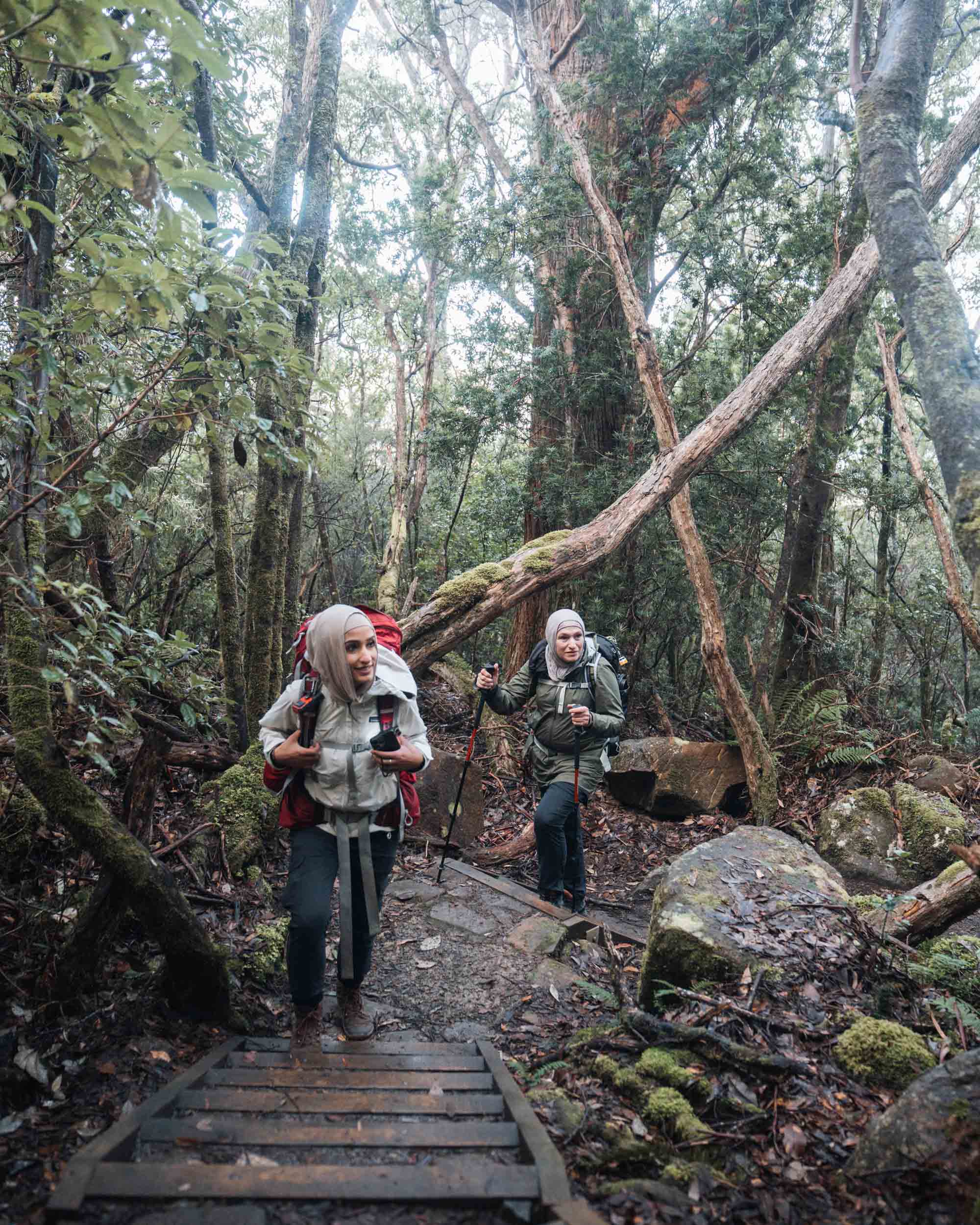
At the start of the side trip (where all the stairs begin) you can leave your packs, which helps a lot. Still, 2,500 stairs is no joke. Mum looked at them in disbelief, but step by step, she did it. At the top, the cliffs were unreal, dropping straight into the sea.
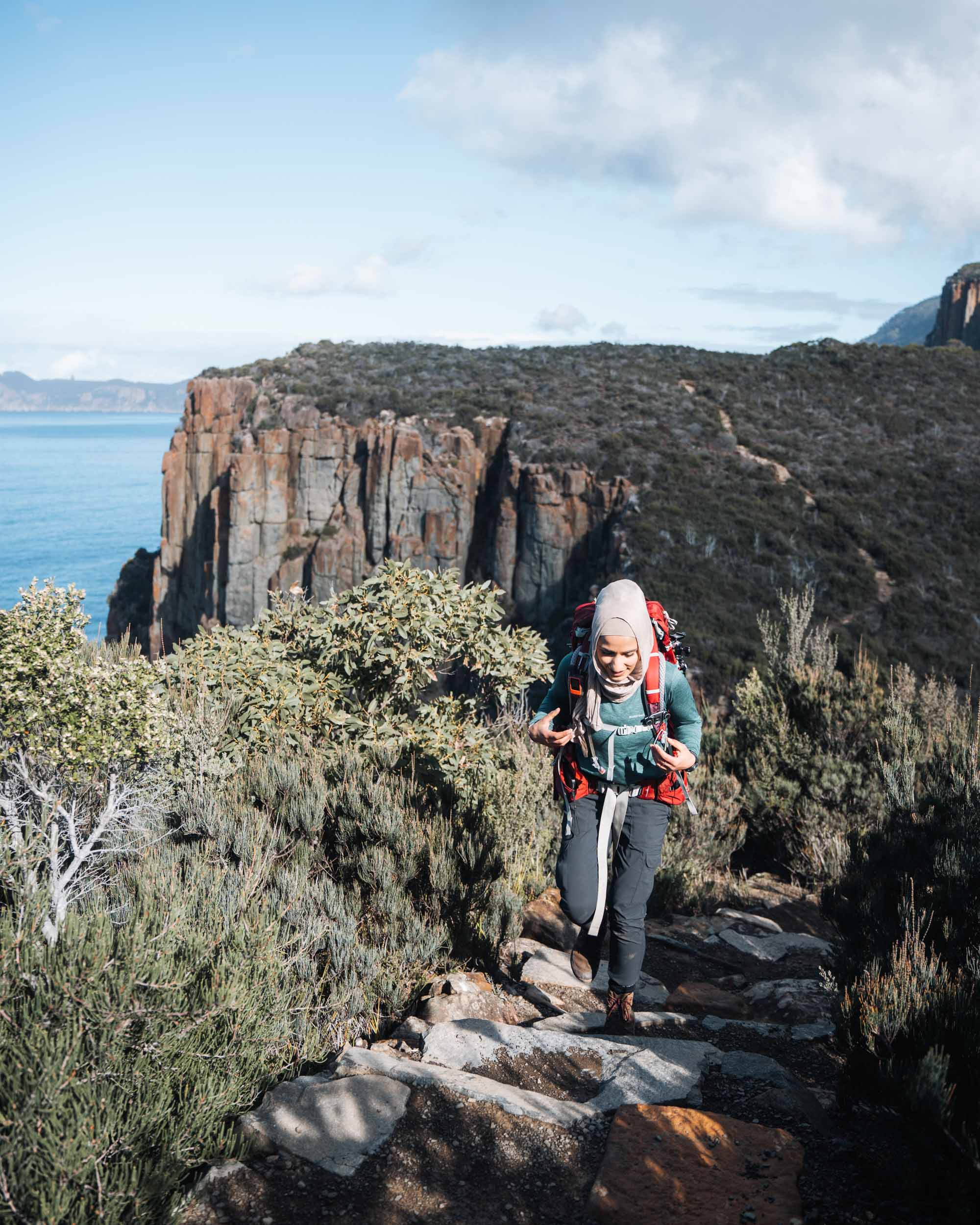
We shared the moment with Michael and Zoe, two from our group, before heading back. Mum pushed through every step. Later, when I asked her how it was, she laughed and said, “the hardest thing I’ve done since giving birth… but I’d do it again five times.”
The final stretch through forest felt long, but then the sound of waves grew louder. Suddenly Fortescue Bay appeared. Four days, fifty kilometres, thousands of stairs. Mum’s first ever multi-day hike.
She did it.
If you arrive early, you can swim at Fortescue Bay or dip your feet in while waiting for the shuttle. The beach is beautiful and has toilets, picnic tables, and plenty of shade.
Logistics and Tips
- Booking: Normally $625, but we paid $475 thanks to a winter promo. You book directly through the official Parks & Wildlife Service Tasmania website. up to 13 months in advance. Only 48 hikers start each day. The summer period usually gets booked well in advanced.
- Transport: There are two daily boat departures (11:30 am and 2 pm) and two return shuttles (2:30 pm and 4 pm). We booked the earlier boat to have more time on trail and due to shorter days in winter, and the later shuttle.
- Car & Parking: I hired a car for my whole 10-day Tasmania trip, including the 4 days on trail. Leaving it at Port Arthur worked out cheaper than organising separate shuttles and Ubers. There’s free overflow parking at the Visitor Centre.
- Luggage storage: There’s a room for large bags and secure lockers for valuables. I left my laptop there and kept the key. Also no extra charge for this.
- Reception: I had Telstra signal most of the way.
- Water: Rainwater tanks are at each hut. Most people drank it straight; I treated mine using a Katadyn Filter.
- Weather: We got really lucky. Every time it rained, it was after we arrived at huts. Still, pack rain gear as the weather can change so fast at any moment.
- Port Arthur: If you book the early boat, you will not get enough time to see the historic site before the hike. We visited the day after and it was incredible. Plan time for it, its worth it. You will have free entry for an entire year if you've been on the Three Capes.
- Camping: Camping isn’t part of the official Three Capes Track. The 4-day walk is hut based and includes the boat transfer from Port Arthur. If you want to camp in the same area, you can take the independent route from Fortescue Bay on the Cape Pillar Track, with camping at Bare Knoll (check current water and space). Wughalee Falls has been closed for a while, so confirm status before you go. This route skips the start of the official experience, but you can still do Cape Hauy as a separate day walk from Fortescue Bay
Huts on the Three Capes Track
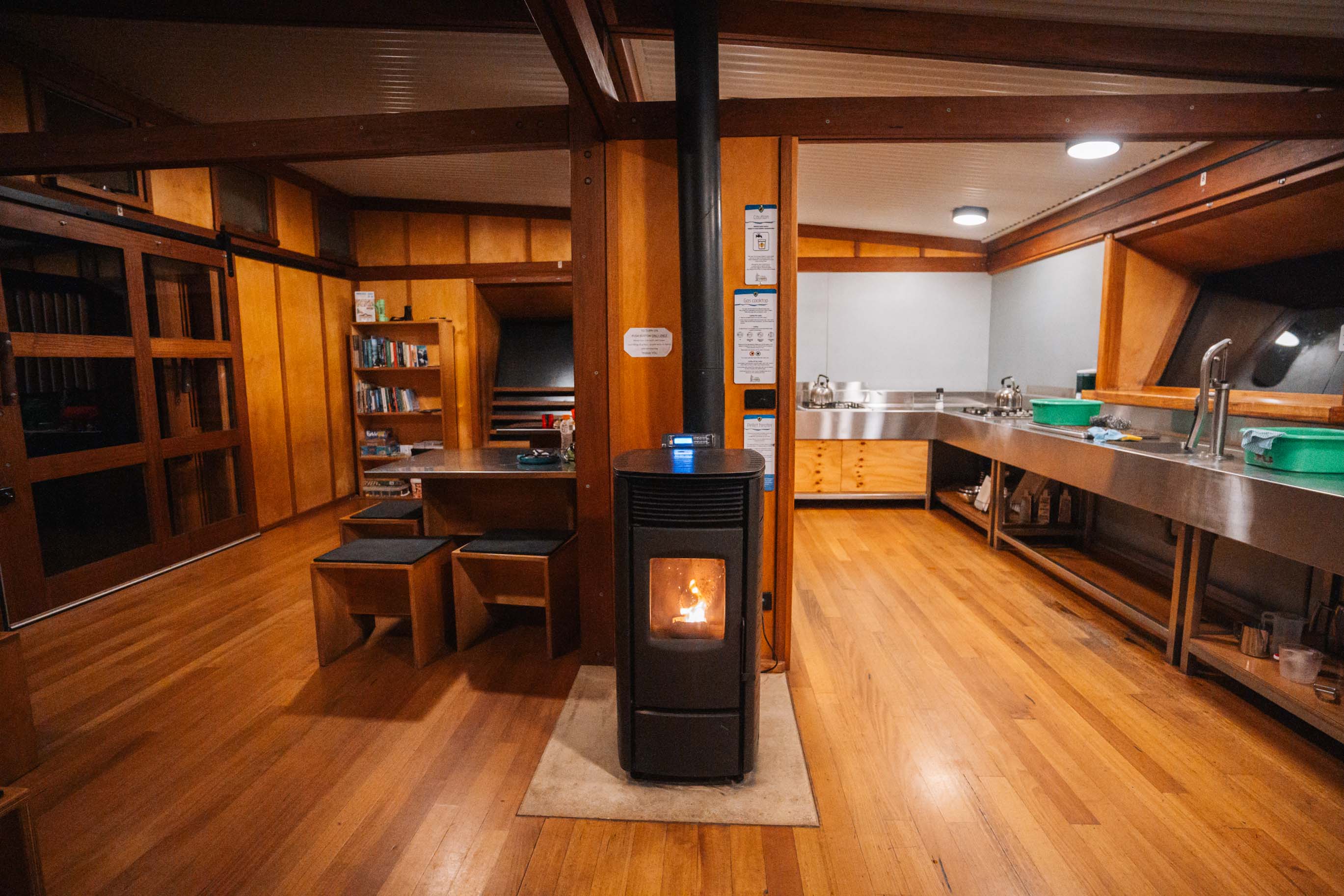
The huts on the Three Capes Track are modern, clean and well designed. They fit into the landscape nicely and make the experience comfortable while still feeling remote. Each one has large kitchen and dining areas, outdoor decks, and bunkrooms for four or eight people.
Everything runs on solar power and rainwater. The kitchens have gas stoves, kettles, sinks with rainwater, and plenty of space to cook. You don’t need to bring a stove or pots, just your own bowl, cup and cutlery. The toilets are composting, very clean, and have hand soap and running rainwater.
The sleeping rooms were spotless and the mattresses really comfortable. There are no lights inside, so you’ll need a head torch at night, but the common areas are warm and well lit. We had the huts completely to ourselves each night, which made the evenings peaceful and quiet.
Even though it was freezing outside, the rooms felt insulated. I had a warm sleeping bag but didn’t need any layers. It was toasty inside.
There are USB-A and USB-C charging points in the shared areas for phones and cameras, but no power points in the bunkrooms. Munro Hut also has simple outdoor bucket showers that feel amazing after a long day.
Each hut has rainwater for drinking and washing. Most people drank it straight, but I filtered mine with a Katadyn just to be safe. Overall, the huts were warm, clean and comfortable — the perfect base each night after a big day on the trail.
Food on the Track
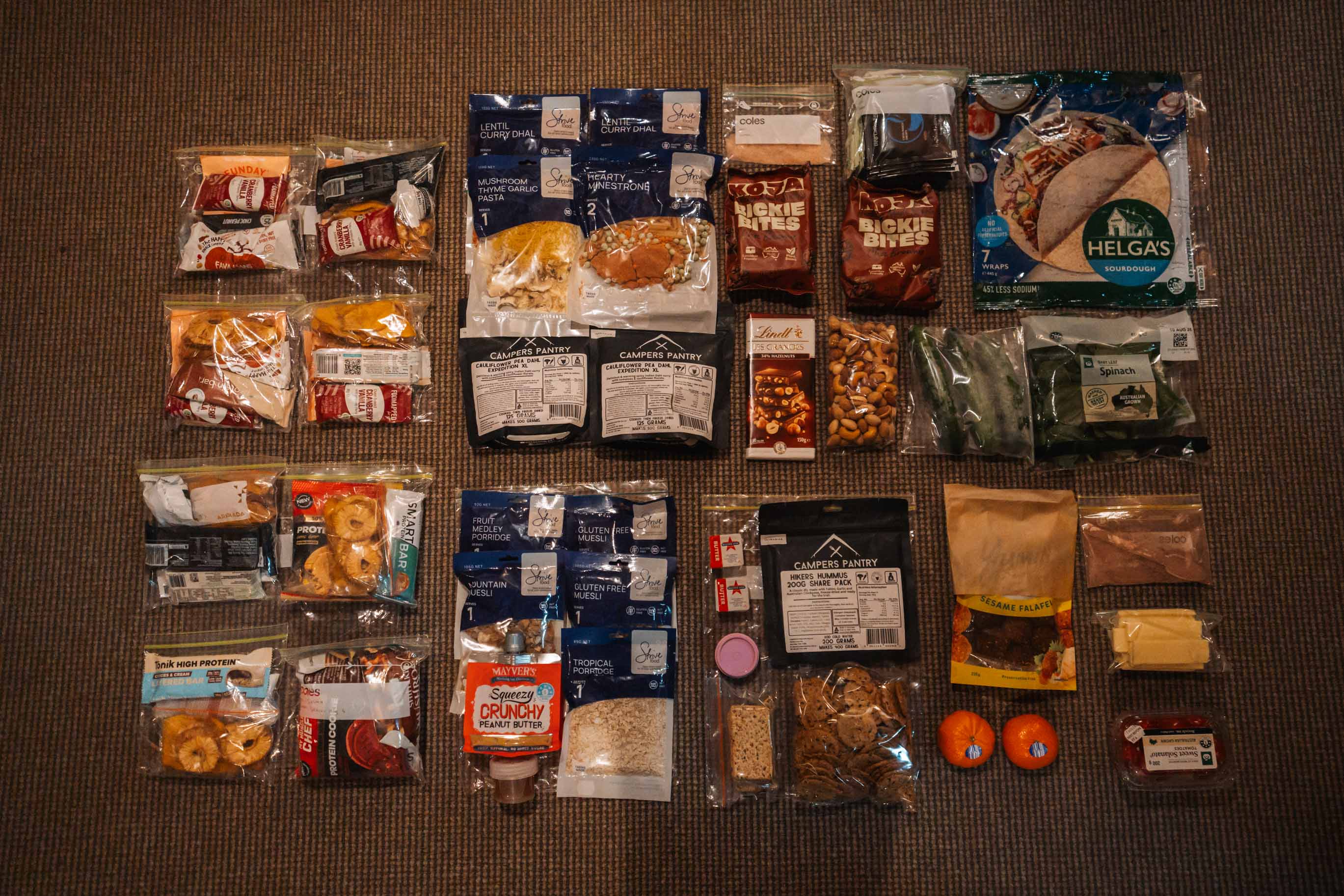
Here’s exactly what we ate each day. Keeping it simple with wraps, dehydrated meals, and easy snacks worked perfectly. It kept us fuelled without carrying too much weight.
Day 1
- Breakfast: At the lodge before we left
- Lunch: Skipped lunch because we had a big breakfast, and just had snacks and dinner once we arrived
- Dinner: Lentil Curry Dahl (Strive Meal)
- Snacks: Apple, mandarins, KOJA biscuits, crackers and cheese, protein bar, Funday lollies, roasted fava beans
Day 2
- Breakfast: Banana and fruit medley porridge & muesli with coffee
- Lunch: Falafel wraps with dehydrated hummus, spinach, and cucumber
- Dinner: Minestrone (Strive Meal)
- Snacks: Dried mango and pineapple, KOJA biscuits, protein bar, Funday lollies, roasted nuts, crackers with cheese at night, peanut butter
Day 3
- Breakfast: Mountain muesli & regular muesli with coffee
- Lunch: Falafel wraps with dehydrated hummus, spinach, and cucumber
- Dinner: Campers Pantry Cauliflower & Pea Dahl and Strive Mushroom, Thyme & Garlic Pasta
- Snacks: Peanut butter with crackers, honey, protein bar, Funday lollies, bliss balls, roasted nuts, crackers with cheese at night, butter and Vegemite
Day 4 – 14 km
- Breakfast: Muesli with powdered oat milk with coffee
- Lunch: Hummus with crackers
- Snacks: Protein bar, Funday lollies, dried mango and pineapple, chocolate square (trail treat), roasted nuts, peanut butter
The first hut has a BBQ, and the rest have stoves, kettles etc, so you don’t need to carry a stove unless you were planning to make a hot meal on the trail. Some hikers bring pancake mix, steak, grilled veggies etc especially for the first night.
Gear
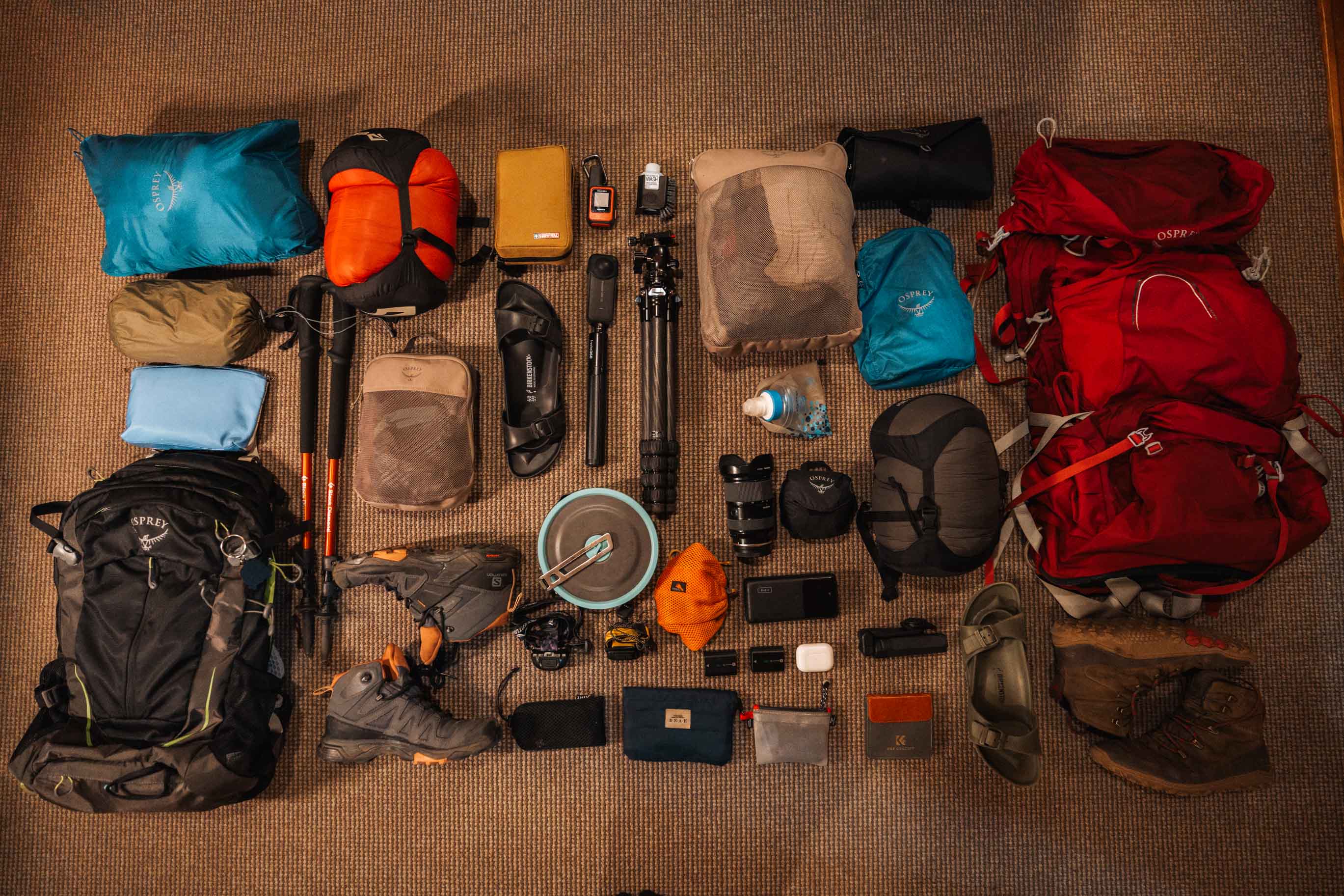
Between two people, this is what we carried:
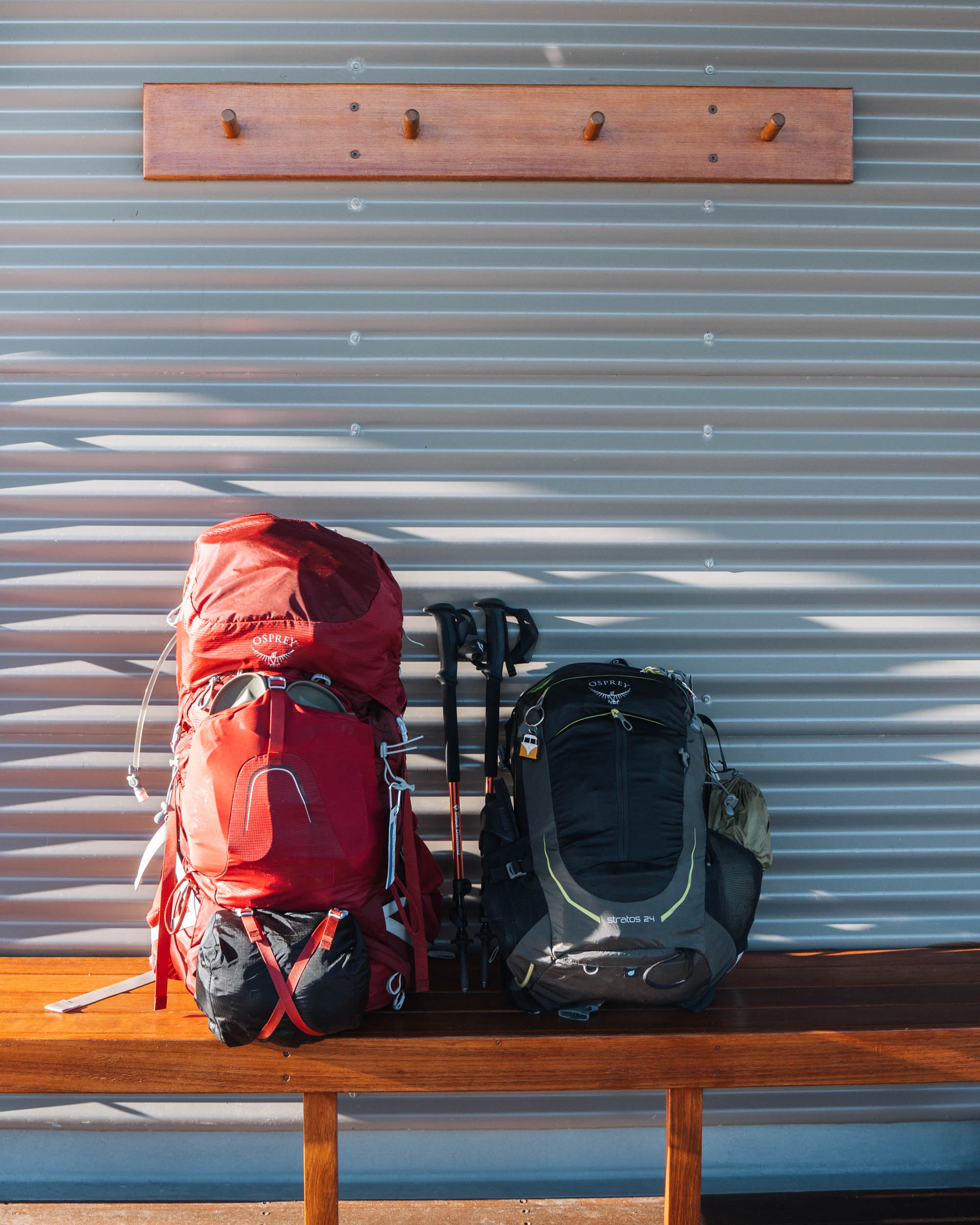
I carried about 22.5 kg including most of the food, cooking gear, and shared items. Mum carried around 9.5 kg which was still the heaviest she’d ever carried, but manageable for her first big hike.
- Backpacks: Osprey packs (65L + 30L)
- Sleeping bags: Sea to Summit Flame IV (-10) and Ascent (-1) — both super warm in winter huts
- Sleeping mats: Not needed, huts have matresses
- Clothing:
- Puffer, fleece, rain jacket and rain pants
- Hiking pants + merino base layers
- Beanie, gloves, sports bras, spare socks
- Footwear: Hiking boots (Salomon + Vivobarefoots), Birkenstocks
- Cooking & eating: No stove needed (huts have them), but we brought lightweight cutlery, collapsible bowls and cups.
- Hydration: 2L water bladder each + katadyne water filter (not essential, but I always keep a water filter on me)
- Electronics: Camera (Sony A7IV), tripod, Rode Video MIC II, extra batteries, power bank, Garmin InReach
- Other essentials: Trekking pole (x1), survival first aid kit, head torch, toiletries, sunscreen, and dry bags for packing. The dry bags were especially useful. We used them to store our gear to lighten our bags on day 3, and the smaller ones were perfect for carrying our food, cutlery etc between our room & the common area every night.
Am I Fit Enough?
You don’t need to be super fit to do the Three Capes Track, but a basic level of walking fitness definitely helps. The track is really well built, with wide paths, steady climbs, and plenty of boardwalks, so even the longer days feel manageable if you take your time.
If you already walk regularly or hike on weekends, you’ll be fine. But if you’re new to hiking, start getting out for longer walks. Include some hills or stairs, and try walking with a weightedbackpack to get used to the weight.
The longest day is about 19 km if you do the Cape Pillar side trip, and the final day includes more than 2,500 stairs. It’s more about endurance, so pace yourself and take plenty of breaks.
You do have the option to skip that last 2,500-stair section to Cape Hauy, but I wouldn’t recommend it. It’s such a beautiful part of the track and you’ll be so glad you did it. Still, it’s good to know that option exists just in case you really need it.
Mum had never done a multi-day hike before this, no training, just determination, and she still smashed it. The track is designed to be achievable for most people, as long as you’re ready to keep moving and enjoy the journey.
Check the Packing List
There’s a really good packing list on the Three Capes Track website that covers everything you need for the hike. It’s super detailed and gives you a clear idea of what’s already provided in the huts, so you don’t end up overpacking.
It’s worth looking through it before your trip, especially if it’s your first multi-day hike. It helps you plan your gear properly and make sure you’ve got all the essentials sorted.
Reflection
The Three Capes Track is designed to be accessible, with well-built trails, great huts, and achievable distances, but that doesn’t take away from its magic. The landscapes are constantly shifting, from towering cliffs to mossy forests to wild oceans.
For mum, it was her very first multi-day hike. She went from never having done one to finishing 48 km, climbing 2,500+ stairs, and carrying the heaviest pack she’s ever had. She did it with a smile the whole way.
I’ve always known my mum is strong, but seeing her do this proved it in a way I’ll never forget. She finished saying she’d do it all again. And honestly, so would I.
This was more than just a hike. It was one of the most special adventures of my life.
For anyone thinking about doing the Three Capes, it’s one of the best introductions to multi-day hiking in Australia. Whether you’re new or experienced, it’s equal parts challenge, comfort, and pure Tasmanian wilderness.